Source High Precision Stainless Steel Ball for Mechanical, Bearing, and Car Uses
Compare 30 listings for high precision stainless steel ball options available from Chinese suppliers. Buyers can evaluate sizes ranging from 0.5mm to 150mm, various grades like G10 to G1000, and packaging details for mechanical, bearing, and automotive applications.
Key considerations
Products List




Comprehensive Sourcing Guide
Strategic Sourcing Guide for High Precision Stainless Steel Balls
Understanding Technical Specifications and Material Grades
When sourcing high precision stainless steel balls, the primary objective is to align the physical and chemical properties of the component with the operational demands of the application. The market offers a diverse range of specifications, and buyers must navigate these carefully to ensure performance reliability. Based on available market data, the diameter range for these components is extensive, spanning from micro-scale applications at 0.5mm up to industrial sizes reaching 150mm. Specific listings indicate common model ranges such as 1.0mm to 25.4mm, 2mm to 25.4mm, and 1.5mm to 25.4mm. For applications requiring larger diameters, ranges extending to 180mm are also observed.
Material selection is the cornerstone of defining the ball's performance. While the core keyword specifies stainless steel, the supply chain frequently lists Carbon Steel and Chrome Steel as alternative materials for similar applications. For stainless steel variants, the grade is a critical differentiator. Buyers should verify that the supplier provides balls conforming to specific grade classifications, such as G10 through G1000, which denote the precision and roundness tolerance of the ball. The G-grade system is a standard industry metric where a lower number indicates higher precision. For instance, G10 represents a very high precision grade suitable for critical bearings, whereas G1000 is a lower precision grade often used for general mechanical applications.
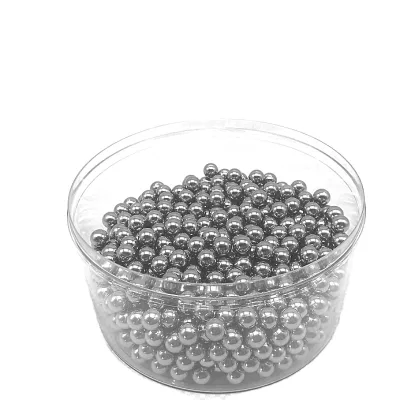
The physical shape of the component is described as "Rotundity," ensuring a spherical geometry essential for smooth rotation and load distribution. The surface finish is another vital technical attribute, with listings noting a "Shine Bright" finish. This indicates a polished surface that reduces friction and wear. The color is typically observed as "Silvery White" or "Sliver," which is characteristic of stainless steel. However, buyers must not assume all listed products share identical surface treatments; the specific finish must be confirmed against the technical drawing or specification sheet for the intended use.
Compliance, Certification, and Standard Verification
In the B2B procurement of precision components, compliance with international and national standards is non-negotiable. The supply chain for high precision stainless steel balls often references adherence to both National and International Standards. A specific certification frequently observed in the market is ISO, with some listings explicitly mentioning ISO and CE certifications. These certifications serve as indicators that the manufacturer has established quality management systems and that the products meet specific safety and performance criteria.
However, buyers must exercise caution regarding the interpretation of these certifications. While ISO is a high-confidence fact in the observed data, the specific standard number (such as ISO 3290) is noted in background information with low confidence. Therefore, it is prudent for procurement teams to request the specific certificate documents from the supplier rather than relying on general marketing claims. The verification process should include checking the validity of the ISO certificate and ensuring it covers the specific manufacturing process for the stainless steel balls being purchased.
Standard parts availability is another key indicator of supply chain maturity. Listings confirm that "Standard Parts" are available, which suggests that off-the-shelf solutions exist for common sizes. For non-standard requirements, the attribute "Customization: Available" and "Customized: Customized" indicates that suppliers can accommodate bespoke orders. When dealing with custom orders, the verification of standards becomes even more critical. The buyer should ensure that the custom dimensions, such as the 2mm, 11mm, or 21mm models observed in the market, are produced to the agreed-upon tolerance levels and material grades.
Cost Drivers and Pricing Dynamics
The pricing of high precision stainless steel balls is influenced by a complex interplay of factors, including material costs, precision grade, order volume, and packaging requirements. The observed price range in the market spans from 0 to 1000 USD, though this broad range likely reflects the difference between single-unit samples and bulk industrial orders. It is important to note that this range is an observation of listed prices and does not represent a fixed price point for all transactions.
The most significant cost driver is the precision grade. Balls with a G10 or G16 grade require significantly more machining time and quality control than those in the G1000 range. Consequently, the unit cost for high-precision balls will be substantially higher. Additionally, the material type plays a role; while stainless steel is the focus, the specific alloy composition affects the raw material cost. Carbon steel and chrome steel alternatives may offer different price points, but they do not meet the corrosion resistance requirements of stainless steel applications.
Order volume is another critical factor. The Minimum Order Quantity (MOQ) varies widely, with observed ranges from 1 to 10,000 units. Some suppliers offer "Stock or Talk Together" options, suggesting flexibility for smaller orders, while others may have stricter MOQs for custom specifications. Buyers should anticipate that smaller order quantities will carry a higher per-unit cost due to setup and handling fees. Conversely, larger orders may benefit from economies of scale but require a longer lead time for production and logistics.
Typical Applications and Usage Scenarios
High precision stainless steel balls are versatile components utilized across a wide array of industries. The observed usage attributes include Mechanical, Bearing, Car, Furniture, Cosmetic, and S (likely referring to specialized sectors). In the mechanical sector, these balls are fundamental to the operation of bearings, where they facilitate smooth rotation and reduce friction between moving parts. The automotive industry relies on them for various mechanisms, including suspension systems and transmission components, where durability and precision are paramount.
The furniture industry utilizes these balls for sliding mechanisms, such as in drawers and cabinet hinges, where smooth operation and resistance to corrosion are essential. In the cosmetic sector, stainless steel balls are often used in applicators and mixing devices, where hygiene and material safety are critical. The "Exquisite Workmanship" and "Very Good" quality attributes observed in the market suggest that these components are suitable for high-end applications where aesthetic and functional performance are equally important.
The specific size of the ball dictates its application. Micro-balls in the 0.7mm to 2mm range are ideal for precision instruments and small mechanical devices. Larger balls, such as those in the 11mm to 25.4mm range, are typically used in heavy-duty industrial bearings and automotive components. The ability to customize the size and material allows manufacturers to tailor the component to the specific load and speed requirements of their machinery.
Supplier Evaluation and Origin Verification
Selecting the right supplier is a critical step in the procurement process. The market data indicates that the primary origin for these products is China, with specific mentions of Taian City and Taian City, Shandong Province. These regions are known for their manufacturing capabilities in steel products. When evaluating suppliers, buyers should verify the location details provided and ensure that the manufacturing facility is capable of meeting the required quality standards.
The attribute "Universal: Yes" suggests that these components are compatible with a wide range of systems, but this does not guarantee that every listed product satisfies this condition. Buyers must confirm the compatibility of the specific model with their existing equipment. Additionally, the "Customization: Available" attribute indicates that suppliers are willing to work with buyers on specific requirements, but this requires clear communication and detailed specifications.
Packaging is another aspect of supplier evaluation. Listings show various packaging options, including Carton, Paper Box/Woven Bag+Wooden Crates/Pallets, and Steel Drum. The choice of packaging depends on the order size and shipping requirements. For international shipments, robust packaging like wooden crates or steel drums is often necessary to prevent damage. Buyers should discuss packaging requirements with the supplier to ensure the balls arrive in pristine condition.
Quality Control and Inspection Protocols
Quality control is paramount when sourcing high precision components. The observed attributes "Exquisite Workmanship" and "Very Good" quality highlight the importance of rigorous inspection processes. Buyers should implement a quality control plan that includes visual inspection, dimensional verification, and material testing. The surface finish, described as "Shine Bright," should be checked for scratches, pits, or other defects that could affect performance.
Dimensional accuracy is critical, especially for balls in the G10 to G1000 range. Buyers should request test reports or certificates of analysis that confirm the diameter and roundness of the balls. The standard "National and International Standard" mentioned in the data suggests that suppliers should adhere to recognized testing protocols. However, buyers must verify that the specific tests performed align with their internal quality requirements.
For custom orders, the inspection process should be more stringent. Buyers may need to conduct their own testing or hire a third-party inspection agency to verify that the custom specifications are met. The "MOQ: Stock or Talk Together" attribute suggests that some suppliers may be flexible with small orders, but this flexibility should not come at the expense of quality. Buyers should insist on quality assurance documentation for all orders, regardless of size.
Long-Term Procurement Considerations
Sourcing high precision stainless steel balls is not just a one-time transaction but a long-term partnership. Buyers should consider the supplier's ability to maintain consistent quality over time. The "Standard Parts: Yes" attribute indicates that suppliers have established processes for producing standard sizes, which is a positive sign for long-term reliability. However, for custom orders, the supplier's capacity to scale production while maintaining quality is crucial.
Lead times and logistics are also important considerations. While specific lead times are not provided in the data, the wide range of MOQs suggests that production schedules may vary. Buyers should establish clear communication channels with the supplier to manage expectations regarding delivery times. The origin location, Taian City, Shandong Province, implies that shipping times may vary depending on the destination and logistics arrangements.
Finally, buyers should consider the total cost of ownership, not just the unit price. High precision balls that fail prematurely can lead to significant downtime and replacement costs. Therefore, investing in high-quality components from reputable suppliers is essential. The "Customization: Available" attribute offers an opportunity to optimize the component for specific applications, potentially extending the life of the machinery and reducing long-term maintenance costs. By focusing on quality, compliance, and supplier reliability, buyers can ensure a steady supply of high precision stainless steel balls that meet their operational needs.
FAQs
What certifications do high precision stainless steel balls typically have?
Products often carry ISO certification, with some listings explicitly stating ISO and CE compliance. Buyers should verify specific certificate documents from the supplier to ensure the quality management systems cover the manufacturing process.
Which material grades are available for stainless steel balls?
Available grades range from G10 to G1000, where lower numbers indicate higher precision. While stainless steel is the focus, carbon steel and chrome steel variants are also listed for different application requirements.
How can I customize the size of the steel balls?
Customization is available for various diameters, including specific models like 2mm, 11mm, and 21mm. Suppliers can accommodate bespoke orders, but you must confirm the agreed tolerance levels and material grades for the custom dimensions.
What are the standard packaging options for these components?
Packaging includes cartons, paper boxes with woven bags, wooden crates, and steel drums. The choice depends on order size and shipping needs, with options like 25kg per box or bag often specified for bulk shipments.
Can I find suppliers in specific Chinese locations?
Yes, primary origins include Taian City and Taian City in Shandong Province, China. Buyers should verify these location details to ensure the manufacturing facility can meet the required quality standards and delivery schedules.
What is the typical minimum order quantity for these balls?
MOQs vary widely from 1 to 10,000 units, with some suppliers offering stock or flexible terms. Smaller orders may carry higher per-unit costs, while larger orders benefit from economies of scale but require longer lead times.
Which industries use high precision stainless steel balls?
Applications span mechanical, bearing, automotive, furniture, and cosmetic sectors. The balls facilitate smooth rotation in bearings and are used in sliding mechanisms where corrosion resistance and hygiene are critical for performance.